
Savoy Revisited is an ongoing Bourbony series exploring Harry Craddock’s 1930 Savoy Cocktail Book. Each recipe is recreated as faithfully as practical using modern ingredients, then judged by one simple question: Does it still deserve a place in today’s home bar?
About the Cocktail
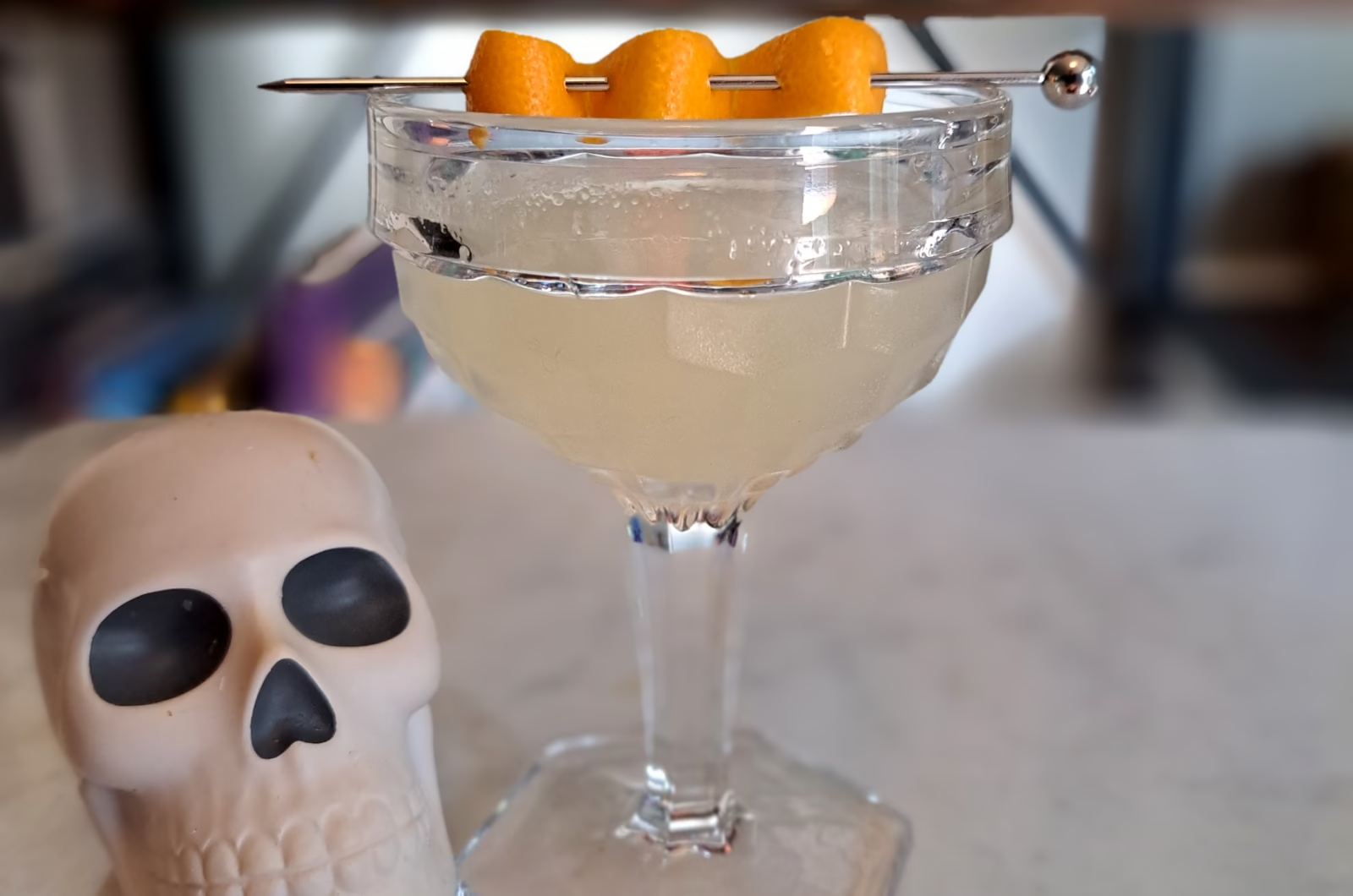
The Corpse Reviver #2 has earned a reputation as one of the greatest classic cocktails ever created. Originally published in Harry Craddock’s The Savoy Cocktail Book in 1930, it’s a deceptively simple combination of gin, lemon juice, Cointreau, Kina Lillet, and a dash of absinthe. Nearly a century later, it’s still found on cocktail menus around the world.
But does it actually deserve the hype?
This recipe is the first installment in my Savoy Revisited series, where I’m working my way through Harry Craddock’s original recipes to find out which cocktails still deserve a place in a modern home bar… and which ones are best left in 1930.
For this recreation, I stayed as faithful as practical to Craddock’s original recipe while converting his measurements into modern ounces. The biggest unavoidable change is substituting today’s Lillet Blanc for the now-discontinued Kina Lillet, but otherwise this is about as close as most home bartenders can get to what was being served at London’s Savoy Hotel nearly 100 years ago.
Flavor Expectation
Overall Balance
Bright and citrus-forward with crisp botanical notes from the gin. Cointreau provides sweetness without becoming syrupy, while Lillet Blanc softens the lemon and adds gentle floral and honey notes. The dash of absinthe quietly ties everything together, adding herbal complexity without dominating the drink.
Flavor Expectation
Think of this as a more elegant, more aromatic cousin to a classic gin sour. It’s refreshing, beautifully balanced, and surprisingly approachable considering its legendary status. If you’re worried about the absinthe, don’t be—the drink isn’t licorice-forward. Instead, the absinthe acts almost like a seasoning, making the other ingredients taste more complete.
Savoy Verdict
★★★★★ — Modern Home Bar Approved
Sometimes classics become classics for a reason. Despite the unavoidable substitution of modern Lillet Blanc for the original Kina Lillet, the Corpse Reviver #2 remains an outstanding cocktail that feels every bit as relevant today as it must have in 1930.
From 1930 to Today
One of the biggest differences between Harry Craddock’s original recipe and today’s version is an ingredient you’ll never be able to buy: Kina Lillet.
Kina Lillet was a quinquina—a fortified wine flavored with quinine—that carried noticeably more bitterness than today’s Lillet Blanc. When the recipe was reformulated in the 1980s, the quinine was reduced, the profile became fruitier, and the “Kina” name disappeared. Some bartenders now substitute Cocchi Americano to recreate that original bitterness, but I chose Lillet Blanc because it’s the closest widely available descendant.
Craddock’s measurements are another interesting piece of history. Rather than ounces, he specified ¼ wine glass of each main ingredient. Since wine glasses weren’t standardized, modern recipes vary considerably in size. I converted his recipe to equal ½-ounce portions, creating a drink that feels appropriately scaled while remaining true to the original proportions.
Finally, although many modern recipes call for an absinthe rinse, Craddock simply specified one dash of absinthe. I stayed with the dash, using 110-proof Absente, and found it contributed just enough herbal complexity without overwhelming the drink. I also added an expressed orange peel—not because Craddock called for it, but because it beautifully reinforces the Cointreau and adds an extra layer of citrus aroma.
Notes and Fine Tuning
There wasn’t much I’d change here.
If you’re looking for the closest possible recreation of the 1930 original, try substituting Cocchi Americano for the Lillet Blanc to restore some of the bitterness lost when Kina Lillet was reformulated.
Otherwise, I’d simply pay attention to your absinthe. A dash is enough—especially with higher-proof bottles like Absente 110. It’s there to support the cocktail, not steal the spotlight.
And don’t skip expressing the orange peel. It isn’t historically required, but it adds a wonderful burst of citrus oils that makes the first sip even more inviting.
The Corpse Reviver #2
1
servings5
minutes5
minutesKeep the screen of your device on
Ingredients
1/2 ounce 1/2 ounce Fresh Lemon Juice
1/2 ounce 1/2 ounce Lillet Blanc
1/2 ounce 1/2 ounce Cointreau
1/2 ounce 1/2 ounce Dry Gin
Dash Dash Absinthe
Orange Twist (for Garnish)
Directions
- Add ingredients to a shaker with ice
- Shake until well chilled
- Pour into a cocktail glass
- Express orange peel over top and garnish
Equipment
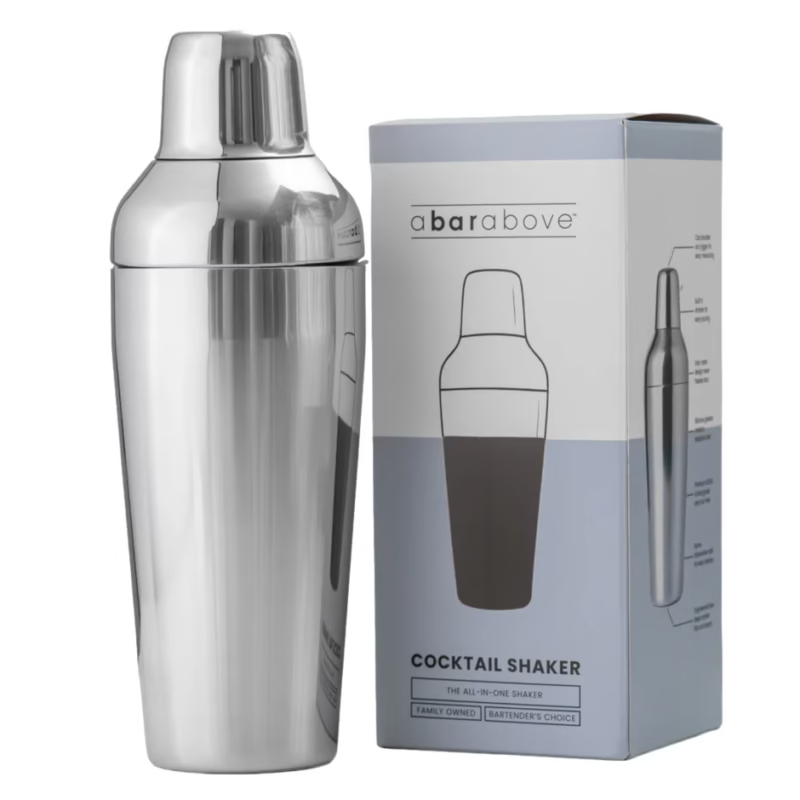 Cobbler ShakerCobbler Shaker
 Stainless Boston ShakerBuy From A Bar Above
 Stainless Bell JiggerBuy From A Bar Above
 Stainless Cocktail PicksBuy From A Bar Above
 Stainless Fine Mesh StrainerBuy From A Bar Above




Leave a Reply